
Fiberlynk: Sourcing the Next Generation of Performance Yarns
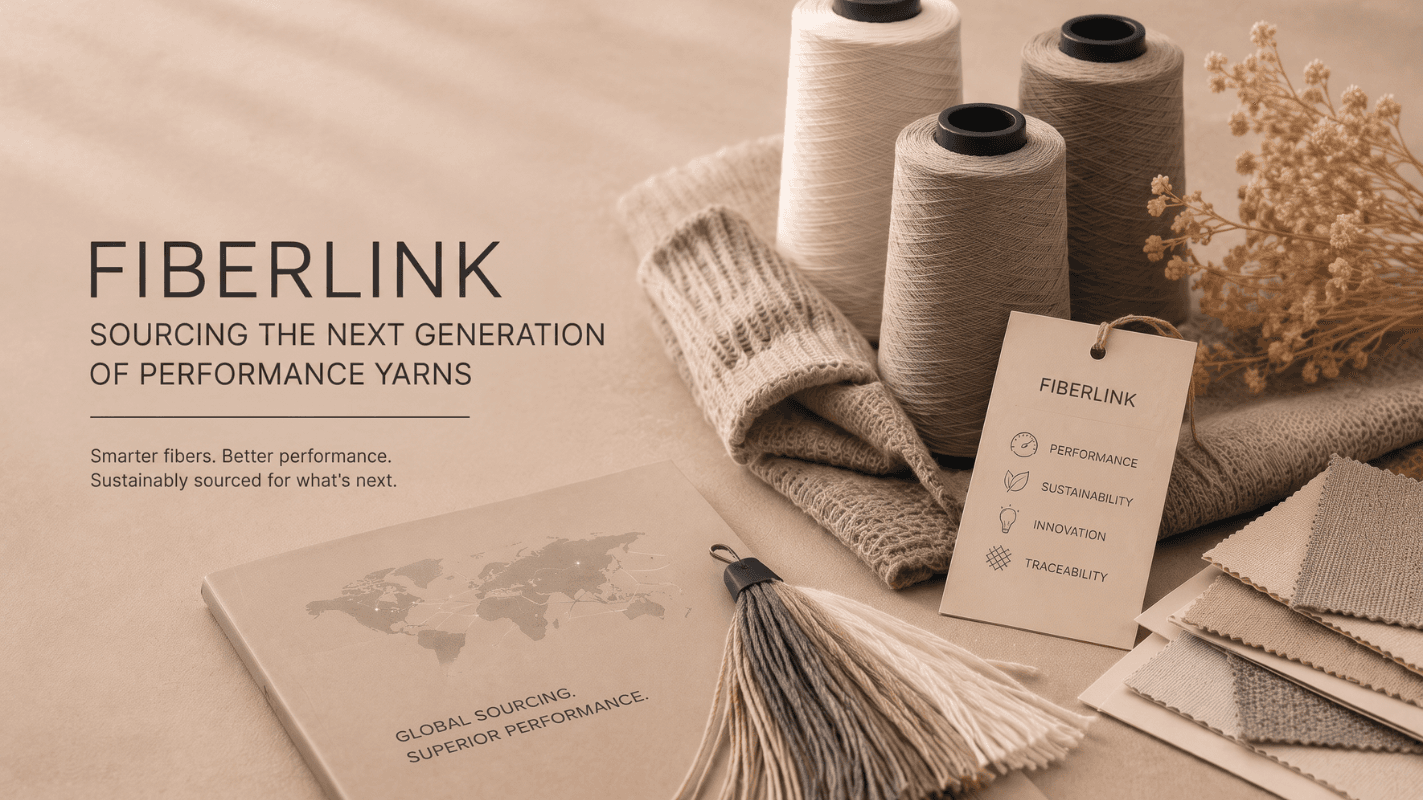
Ask most people what makes a seamless circular knit activewear garment perform well, and they'll point to the knit structure: compression zones, mesh panels, body mapping. All of that matters. But none of it works if the yarn underneath it can't do its job. A perfectly engineered ventilation zone is only as good as the fiber's actual ability to move moisture. A compression panel is only as effective as the yarn's recovery after thousands of stretch cycles. Structure gets the credit, but yarn does a lot of the real work.
That's the piece of the supply chain Fiberlynk exists to solve.
/ Table of contents:
Why Yarn Sourcing Is Usually the Weak Link
For most brands developing seamless circular knit product, yarn sourcing happens at arm's length from actual development. A designer or product team identifies a performance requirement, a sourcing team goes looking for a yarn that fits, and the two conversations rarely happen in the same room at the same time. By the time a promising new fiber technology reaches a brand's radar, it's often already been picked up by competitors, priced through several layers of intermediaries, or simply too far removed from the people actually building the knit program to be evaluated properly.
Fiberlynk was built to close that gap. As Sri Lanka's first dedicated yarn trading and innovation hub, it gives our development work direct, integrated access to a global network of yarn manufacturers, emerging fiber innovators, and sustainability-certified suppliers, all through a single point of contact instead of a chain of them.
What That Access Actually Delivers
The value isn't just having more yarn options. It's having the right options, earlier, and with full visibility into what's actually in them.
First-to-market access means new fiber technologies, recycled fibers, bio-based materials, next-generation performance yarns, reach our development process before they're widely available, which matters enormously for a brand trying to differentiate on material innovation rather than just marketing language.
Supplier-direct pricing removes the layers of markup that usually sit between a yarn manufacturer and a brand's actual cost sheet, which means cost transparency isn't a talking point, it's a structural feature of how sourcing works.
Certification-ready sustainable options mean brands don't have to choose between performance and responsible sourcing as separate conversations happening on separate timelines. And because Fiberlynk is fully integrated with studio development rather than operating as a separate vendor relationship, yarn selection and knit programming happen in parallel instead of in sequence, which is where real product innovation tends to come from.
Partnerships That Extend the Horizon Further
Fiberlynk's yarn network is only part of the picture. Around it sits a broader set of partnerships: relationships with local and international universities focused on textile engineering and material science, direct connections with yarn startups working on next-generation recycled and bio-based fibers at the earliest stage, and active ties with international design hubs bringing trend intelligence from multiple markets rather than a single geographic lens.
Each of these exists for the same reason: to make sure the yarn and material decisions feeding into seamless circular knit development are informed by what's coming next, not just what's already commercially available. A partnership with a yarn startup, for instance, can give a brand access to a new fiber ahead of broader market availability, sometimes with the opportunity to co-develop a period of exclusivity around it, something that's very difficult to replicate once a fiber has gone fully mainstream.
What This Means for a Brand Building Performance Product
Treating yarn sourcing as a back-office procurement function, separate from actual product development, is one of the most common ways brands leave performance and differentiation on the table. The yarn a garment is built from shapes what that garment can and can't do, long before a Santoni program ever gets written.
Our approach treats yarn sourcing as part of the development conversation from day one, not a constraint discovered after the fact. Fiberlynk exists so that when we sit down to engineer a new seamless program, the question isn't “what yarn can we get.” It's “what yarn is actually right for this,” with a global network already positioned to answer that.
Seamless Fiberlynk
Santoni Tech
Yarn Innovation
Activewear
Circular Fiberlynk
Concept to Production
IP Ownership
Fiberlynk
Performance Wear
Sustainable Fibers
Textile Engineering
Global Sourcing
Compression Wear
Sports Bras
Cost Transparency